


SO-DI-UM

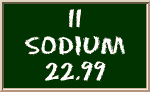
As we begin our exploration of the third period (row) of the periodic table, we find the element sodium (Na). Being in the first column, sodium is a member of the alkali metal family with potassium (K) and lithium (Li). Sodium's big claim to fame is that it's one of two elements in your table salt. When bonded to chlorine (Cl), the two elements make sodium chloride (NaCl). Sodium is also used as a salt in many fertilizers.
Even though humans have been using sodium for thousands of years, it was not isolated until 1807 by a chemist named Davy. When you purify sodium, you actually wind up with a silvery bright metal that is quite soft and malleable. Sodium is one of the few metals that will float when it is placed in water (H2O). Sodium's atomic mass is less that water's atomic mass of 18 amu.
Where can you find sodium?
|
Glass Manufacturing Sodium is used to make glass. You know that silicon makes up most of glass. In the process of making glass sodium is often used as well. |

|
Paper Manufacturing The next time you write on a piece of paper you should know that sodium is used to make that paper. Paper is originally from trees. Before it gets to you a lot of chemicals are used to get it ready. Sodium is one of the elements used. |
|
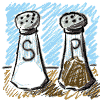
Table Salt When you sit at the table for dinner look for the salt shaker. Sodium and chlorine combine to make salt. If you look at the salt very closely you can see that they make little crystals. Those crystals look like little cubes. The shape is partially because of sodium. |

|
Developing Solutions When your parents send their photographs on film to be developed, the company uses different liquids to make the pictures appear. Sodium is in some of those solutions. |

|
Fertilizer Sodium is a very important element in fertilizers. Farmers use a lot of fertilizer to make sure their crops grow well. You parents might even use fertilizers in their garden. |

 See the full list of chemistry topics at the site map!
©copyright 1997-2017 Andrew Rader Studios, All rights reserved.
Current Page: Chem4Kids.com | Elements | Sodium
** Andrew Rader Studios does not monitor or review the content available at external web sites. They are paid advertisements and neither partners nor recommended web sites. Also, we do not collect or ask for personally identifiable information on any of our sites. Privacy Policy/Terms & Conditions