


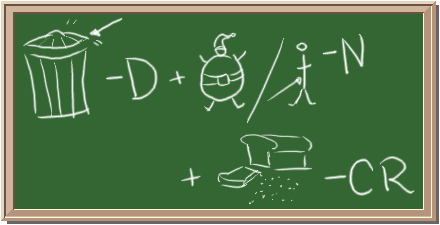
LITH-I-UM

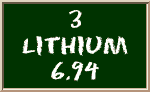
Let's start our look at the second row of the periodic table with lithium (Li). Lithium is the third element of the periodic table and was discovered in 1817 by a chemist named Arfvedson. You might find lithium in everyday objects, such as medicines and batteries.
This is the first metal encountered in the periodic table, and it is a silvery colored solid when purified. One thing to remember is that lithium is never found alone in nature. It is always bonded to other elements. Scientists use the letter pair "Li" to represent lithium in chemical equations. You might find it bonded to chlorine (Cl) from the other side of the periodic table in the molecule lithium chloride (LiCl).
Where can you find lithium?
|
Batteries You have batteries in many of your toys. In flashlights you need batteries. In your watch you probably have a battery. Well... Most of those batteries need lithium to work. Lithium is an important element in the way a battery makes electricity. |

|
Medicine Lithium is used as a medicine too! When you take lithium it acts on nerves in your brain and changes the way you act. |

|
Rocks and Soil Lithium is a metallic element and is found in many rocks. When you're out gathering interesting looking rocks, lithium is probably one of the elements inside. |

|
Hot Springs Sometimes people take vacations at resorts. Some of those resorts are near "Springs". We're not talking about a spring that bounces up and down, but mineral water springs that come out of the ground. Many people think that is healthy and fun to find these springs. |
|
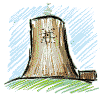
Nuclear Reactors Lithium is a very important element in Nuclear Reactors. It is a very light element which makes it important to scientists. It is used in many chemical reactions and processes. |
|
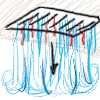
Air Conditioners Next time it's really hot out and you're nice and cool inside, you should thank lithium. Lithium is used in air conditioning systems. You know that everyone uses air conditioning. That means everyone is using some lithium. |
 See the full list of chemistry topics at the site map!
©copyright 1997-2017 Andrew Rader Studios, All rights reserved.
Current Page: Chem4Kids.com | Elements | Lithium
** Andrew Rader Studios does not monitor or review the content available at external web sites. They are paid advertisements and neither partners nor recommended web sites. Also, we do not collect or ask for personally identifiable information on any of our sites. Privacy Policy/Terms & Conditions